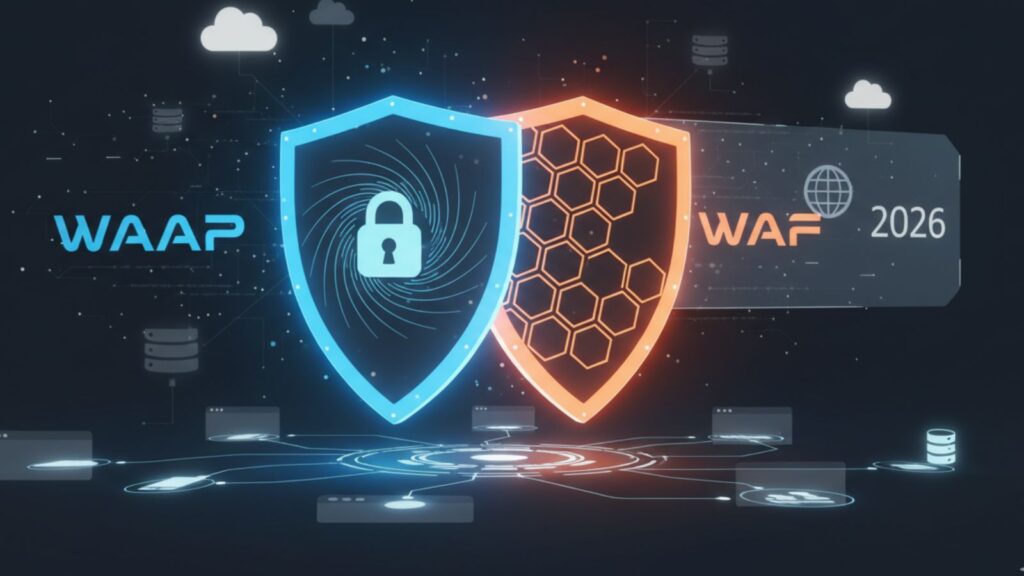
Security teams defending healthcare portals and banking platforms face a critical decision in 2026. Traditional Web Application Firewalls no longer match how applications actually work, yet many CISOs hesitate to move to Web Application and API Protection platforms without understanding the real differences. The stakes are higher than ever because API attacks grew 400% in 2025, targeting the exact endpoints that legacy WAF solutions cannot see. The CAP Solution from SKYWATCH OS addresses this gap by delivering unified protection across web and API layers, combining intelligent threat detection with MSS-CLOUD monitoring and MSS-EASM capabilities that reveal your complete attack surface through Kanban operational transparency.
This matters because your security budget cannot support both systems running in parallel indefinitely. You need clarity on which approach protects your organization effectively while meeting compliance requirements for HIPAA, PCI-DSS, and emerging API security mandates. Organizations looking to evaluate modern WAAP capabilities can explore the CAP Solution demo to see how unified web and API protection works in practice.
Understanding the Core Difference
Web Application Firewalls handle specific, known threats using signature matching and rule-based detection. These systems excel at blocking common attacks like SQL injection when patterns match their database. However, they struggle with sophisticated, multi-stage attacks that blend legitimate traffic patterns with malicious intent.
Web Application and API Protection platforms take a fundamentally different approach. They analyze behavior across sessions, identify anomalies in real-time, and protect both traditional web applications and modern API endpoints. This matters because attackers now target APIs more frequently than web interfaces, yet many organizations still rely on tools designed before APIs became central to business operations.
The API Security Gap Nobody Talks About
Healthcare providers and financial institutions face unique challenges that generic security tools miss. Patient portals and banking applications expose dozens of API endpoints, each processing sensitive data thousands of times daily. Traditional WAF solutions monitor these endpoints but lack context about normal versus suspicious API call patterns.
| Security Aspect | Traditional WAF Approach | Modern WAAP Requirements |
|---|---|---|
| API Discovery | Manual configuration required | Automatic endpoint mapping and inventory |
| Authentication Issues | Monitors login attempts only | Tracks token lifecycle and session anomalies |
| Data Exposure | Blocks obvious SQL injection | Detects excessive data queries and unusual response sizes |
| Bot Traffic | Simple rate limiting | Behavioral analysis across multiple requests |
Consider a real scenario from 2025. A credit union detected unusual API calls to their account balance endpoint. Their WAF logged the requests but flagged nothing because each individual call appeared legitimate. A WAAP system would have identified the pattern: the same authenticated user querying hundreds of different account numbers within minutes, testing access controls systematically.
Why 2026 Changes Everything
Three shifts are redefining application security requirements this year.
First, compliance frameworks now mandate API-specific protection. HIPAA guidance updated in late 2025 explicitly requires healthcare organizations to maintain complete API inventories and monitor for data exposure risks. The FFIEC issued similar requirements for financial institutions, specifying that API security must extend beyond perimeter defense.
Second, the rise of AI-powered applications creates new attack surfaces. Healthcare AI tools analyzing patient data and banking fraud detection systems both rely on APIs that process sensitive information. These systems generate traffic patterns that differ significantly from human users, making traditional security tools ineffective.
Third, shadow APIs have become the primary security gap. Development teams deploy new endpoints faster than security teams can document them. One major health system discovered 340 undocumented API endpoints during a 2025 security audit, each potentially exposing protected health information.
What CISOs Are Getting Wrong
Many security leaders approach the WAF versus WAAP decision by comparing feature lists. This misses the fundamental question: what security model does your application architecture require?
Organizations running primarily traditional web applications with limited API usage may find WAF capabilities sufficient. However, this describes almost no modern healthcare or banking environment. Even organizations that believe they have simple architectures typically discover extensive API usage once they perform proper discovery.
The more critical mistake involves trying to solve modern problems with tools designed for different threats. Adding more WAF rules does not create API protection. Increasing rule complexity often increases false positives, leading teams to disable protection rather than tune it properly.
The Real-World Impact on Healthcare and Banking
Healthcare organizations face penalties averaging $7.42 million per data breach in 2025, with API vulnerabilities accounting for 38% of incidents according to recent analysis. One regional hospital network experienced a breach through an unprotected patient scheduling API that exposed demographic and appointment data for 67,000 individuals. Their WAF protected the main website perfectly but had no visibility into the mobile app API traffic.
Financial institutions encounter different but equally serious risks. Account takeover attacks now target APIs directly rather than web login forms. Attackers obtain credentials through phishing but use API endpoints to transfer funds, avoiding the monitoring that WAF solutions provide for web-based transactions. The average account takeover incident cost banks $4.2 million in 2025 when combining direct losses with investigation and remediation expenses.
Technical Architecture Matters More Than Features
The underlying architecture determines whether a security solution can protect modern applications effectively.
WAF systems operate as reverse proxies, inspecting HTTP requests and responses according to configured rules. This works well for blocking known attack signatures but requires constant rule updates and creates management overhead. Each new application feature may require rule adjustments, and false positives often force security teams to relax protection.
WAAP platforms use machine learning to establish baselines of normal behavior, then identify deviations that indicate threats. This approach scales better because new applications and APIs automatically receive protection without manual rule creation. The system learns what normal looks like for each endpoint and flags anomalies.
However, behavior-based detection requires sufficient traffic volume to establish accurate baselines. Small applications with inconsistent usage patterns may experience more false positives with WAAP solutions than with rule-based WAF protection. Understanding your traffic patterns helps determine which approach fits your needs.
Integration With Your Security Stack
Neither WAF nor WAAP solutions operate in isolation. Modern security requires coordination across multiple systems.
SKYWATCH OS demonstrates this integration through unified visibility. The platform connects CAP Solution protection with MSS-CLOUD monitoring, providing security teams with complete context about application traffic, infrastructure health, and threat patterns. This matters because sophisticated attacks often span multiple layers, requiring coordinated detection and response.
SIEM integration represents another critical factor. Security teams need threat data flowing into their central monitoring systems where correlation with other security events occurs. WAAP platforms typically provide richer API security data than WAF solutions, but integration quality matters more than data volume.
Response automation determines how quickly your team can address threats. Basic WAF solutions block obvious attacks but provide limited options for graduated responses. WAAP platforms enable more nuanced actions like rate limiting specific users, requiring additional authentication, or flagging suspicious activity for manual review.
Making the Right Choice for Your Organization
Healthcare CISOs should prioritize solutions that provide complete API visibility and protect patient data throughout its lifecycle. Look for platforms that automatically discover APIs, classify data sensitivity, and detect unusual access patterns. HIPAA compliance requires demonstrating these capabilities, making them essential rather than optional.
Banking and credit union technology leaders need protection that scales with transaction volume while maintaining low latency. Financial applications often process thousands of requests per second, requiring security solutions that introduce minimal delay. Additionally, the ability to distinguish between legitimate high-frequency trading systems and malicious automated attacks becomes crucial.
The Operational Reality
Security teams face resource constraints that influence tool selection as much as technical capabilities. Consider these operational factors.
Staff expertise determines how effectively your team can manage and tune security tools. WAF solutions require deeper understanding of application architecture and attack patterns to configure properly. WAAP platforms with machine learning capabilities require less manual tuning but need staff who understand how to interpret behavioral analytics and adjust sensitivity thresholds.
Time to value varies significantly. Deploying a WAF typically requires weeks of rule configuration and testing before providing effective protection. WAAP solutions can begin providing value faster because they learn normal behavior automatically, but may require monitoring during the learning period to ensure accuracy.
Kanban operational transparency helps teams manage security tools effectively regardless of which approach they choose. Clear visibility into current protection status, pending configuration changes, and incident response workflows keeps security operations running smoothly.
Cost Considerations Beyond License Fees
Total cost of ownership extends far beyond initial licensing expenses. Factor in these often-overlooked costs.
Management overhead represents the largest ongoing expense for most organizations. WAF solutions requiring constant rule updates and tuning consume significant security team time. Calculate how many hours per week your team currently spends managing application security rules, then multiply by your team’s hourly cost to understand this expense.
False positive handling creates hidden costs. Each false positive requires investigation time, potentially delays legitimate business operations, and may lead to security fatigue where teams start ignoring alerts. Solutions that minimize false positives through better accuracy pay for themselves through reduced investigation time.
Breach costs dwarf tool expenses. The average cost of a data breach continues rising, reaching $4.88 million in 2025 according to industry research. Effective protection that prevents even one breach justifies substantial security investment.
What to Evaluate During Proof of Concept
Hands-on testing reveals more than vendor presentations ever will. Structure your evaluation to answer these questions.
Can the solution discover all your APIs automatically? Deploy the platform in monitoring mode and compare its API inventory to your documentation. The gap between what it discovers and what you knew about reveals your shadow API problem.
How accurate is threat detection with your actual traffic? Run the solution in parallel with your current security stack for at least two weeks, examining both threats it identifies and false positives it generates. Traffic patterns vary by industry and application, making your own data the only reliable test.
Does it scale to your peak traffic volumes? Simulate your busiest periods, adding 50% capacity for growth. Monitor latency impacts and resource consumption under load. Application security should never become an application performance bottleneck.
Implementation Roadmap
Successful deployment follows a structured approach regardless of which solution you choose.
Begin with discovery and inventory. Document all applications, APIs, and data flows before implementing new security controls. This baseline helps you measure improvement and ensures nothing falls through protection gaps.
Deploy in monitoring mode initially. Observe traffic patterns and security events without blocking anything, allowing the system to learn normal behavior while your team learns the platform. This phase typically requires two to four weeks depending on traffic volume and application complexity.
Gradually enable blocking for high-confidence threats first. Start with obvious attacks like known exploit attempts before moving to more nuanced behavioral detections. This phased approach minimizes business disruption while building team confidence in the platform.
MSS-CLOUD integration provides ongoing monitoring that catches issues your internal team might miss. External attack surface management through MSS-EASM adds another layer, identifying vulnerabilities before attackers exploit them.
Measuring Success
Define clear metrics before deployment to demonstrate value and justify continued investment.
Threat detection effectiveness shows how many legitimate threats the platform identifies. Track this over time to demonstrate improving security posture. However, this metric alone can mislead because it lacks context about what the platform missed.
False positive rates reveal accuracy and operational efficiency. A system that blocks 100 attacks but generates 1,000 false alerts creates more work than value. Target false positive rates below 2% for effective operation.
Time to detection and response measures how quickly your team identifies and addresses threats. Automated response capabilities should reduce this time significantly compared to manual processes.
Business impact metrics matter most to executives. Track prevented breaches, avoided downtime, and maintained compliance to demonstrate ROI in business terms.
The Path Forward
Application security in 2026 requires protection that matches modern application architecture. Organizations still relying solely on traditional WAF solutions face growing risks as APIs become central to their operations and attackers adapt their techniques accordingly.
The shift from WAF to WAAP represents more than a technology upgrade. It requires rethinking your security model from signature-based detection to behavior-based protection. This transition takes time and resources but delivers security capabilities that traditional approaches cannot provide.
SKYWATCH OS provides the comprehensive platform that healthcare and financial organizations need. The CAP Solution delivers intelligent protection while MSS-CLOUD monitoring and MSS-EASM services extend your security team’s capabilities. Kanban operational transparency ensures your team maintains clear visibility into security operations even as complexity increases.
The choice between WAF and WAAP depends on your application architecture, risk tolerance, and operational capabilities. However, for organizations protecting sensitive healthcare or financial data through modern cloud applications protection, comprehensive API protection has moved from optional to essential. The question is no longer whether to upgrade your application security, but how quickly you can implement protection that matches current threats. Security leaders ready to explore modern WAAP architecture can schedule a CAP Solution consultation to map their specific requirements to platform capabilities.
 NEWS POSTS